
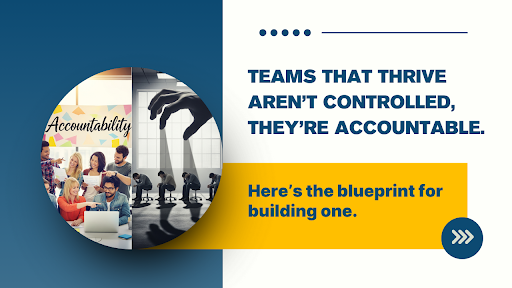
I have often noticed that the word “accountability” gets confused with “control.” Leaders fall into the trap of thinking that being in control means being accountable, and that keeping people “in line” ensures performance. In my experience, it’s quite the opposite. In reality, it is the fastest way to kill initiative.
Control breeds compliance at best. Disengagement at worst. Accountability, when embedded into the culture, and is not enforced from above, unlocks ownership, creativity, and trust.
The highest-performing teams I have worked with had one thing in common: their leaders didn’t micromanage. They didn’t obsess over every move. Instead, they set clear expectations, provided context, and trusted people to deliver. Accountability wasn’t to a manager’s mood, it was to the mission.
So, how do you create such a culture?
1. Clarity of Expectations
Ambiguity is the silent killer of performance. If people don’t know what’s expected of them, they will either hesitate, overdo, or underdeliver. As leaders, we need to define success in tangible terms. That means not just saying “deliver this project,” but clarifying: what does a successful outcome look like? How will it be measured? What does good actually mean in this context?
Clarity allows individuals to take ownership. Instead of guessing, they can align their actions with the agreed definition of success.
Just a couple of years back, I was working with a product team where our target was simply to “launch by Q2.” The team was rushing to meet the date, but everyone had a different idea of what success meant. Interestingly, when we reframed the goal to “launch with 80% feature ready and less than 5% bug reported during QA in Q2,” the shift was immediate. Both product and engineering stopped just racing toward launch and began solving for impact.
If people don’t know what’s expected of them, they will either hesitate, overdo, or underdeliver. As leaders, we need to define success in tangible terms.
2. Transparency in Process
Accountability cannot survive in a black box. Teams need visibility into what’s happening, how decisions are made, and how their contributions connect to the bigger picture. I have seen situations where lack of transparency created unnecessary politics and blame games. But when information flows freely through open updates, dashboards, or simple check-ins, people start holding themselves and each other accountable.
Transparency isn’t about surveillance. It’s about enabling everyone to see the same truth so they can act responsibly.
I once observed that project updates were discussed only in leadership meetings. Teams on the ground had no idea what decisions were being made or why timelines kept shifting. This created confusion, gossip, and finger-pointing.
But when I introduced transparent weekly reviews and shared dashboards accessible to everyone, the change was remarkable. People didn’t wait for instructions, they started identifying gaps, taking initiative, and collaborating better because they all had access to the same truth.
Transparency isn’t about surveillance. It’s about enabling everyone to see the same truth so they can act responsibly.
3. Intrinsic Motivation over Fear
Micromanagement might get you compliance, but it will never get you commitment. Real accountability is powered by intrinsic motivation when people care about doing their best because they are proud of their work, not because they fear the consequences of slipping up.
As leaders, we play a role in unlocking this motivation. Recognizing effort, connecting tasks to purpose, and giving people autonomy creates an environment where accountability feels natural. People don’t just do the work, they own it.
In one of the teams I happened to come across, the turning point came when the leader stopped managing through fear of failure and started focusing on appreciation and purpose.
Instead of asking for updates every few hours, she began acknowledging progress and linking each task back to its impact on the bigger goal. The result was striking! People became more proactive, collaboration improved, and accountability started coming from within rather than being enforced from above.
4. Shifting from Command to Collaboration
Traditional command-and-control leadership assumes that authority equals effectiveness. In reality, it creates bottlenecks and stifles creativity. Shifting to collaborative ownership means involving people in decision-making, encouraging debate, and trusting the collective wisdom of the team.
This doesn’t mean a free-for-all. Accountability remains central. But the leader’s role is to create the structure where individuals feel safe to take initiative and responsible for the results.
I have noticed that some of the most effective leaders listen deeply and make space for others to contribute. In one strategy workshop, a senior leader opened the discussion by saying, “I may not have the best answer, let’s figure it out together.”
That single line changed the energy. People began sharing ideas, and the final plan was stronger because it carried everyone’s fingerprints. Collaboration didn’t dilute accountability; it made it collective.
5. Leading by Example
Perhaps the most overlooked piece of accountability is the leader’s own behavior. Teams watch closely. If leaders don’t own up to mistakes, don’t deliver on their commitments, or hide behind excuses, accountability will never take root. Modeling accountability, admitting when we miss, showing how we course-correct sets the tone more strongly than any speech or policy ever could.
In the past, I had seen a senior leader openly acknowledge a missed client deadline during a team meeting. Instead of shifting blame, he walked the team through what went wrong, what he had learned, and the steps to prevent it in the future.
The impact was immediate – frustration turned into respect and openness. When leaders own up publicly, it signals to everyone else that taking responsibility is valued, and accountability becomes part of the culture, not just a rule.
Conclusion
In my view, building a culture of accountability is less about enforcing rules and more about enabling trust. When people know what’s expected, see the bigger picture, feel motivated from within, and watch their leaders own up, they rise to the occasion.
Control limits. Accountability expands. And it’s this expansion that fuels innovation, responsiveness, and sustainable performance.
#LeadershipDevelopment #AccountabilityCulture #TeamPerformance #TrustAndTransparency #FutureOfWork