
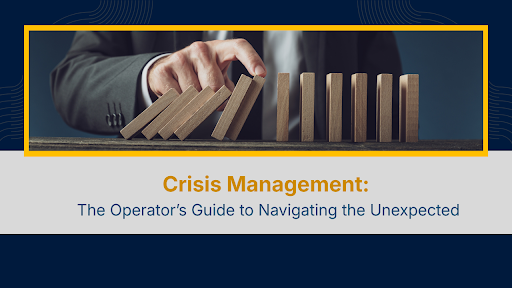
Crisis management is often described as a leadership skill, but for operators like me, it is something more visceral. It is the moment when plans fall apart, timelines collapse, and your team or organization waits for direction, sometimes silently, sometimes anxiously. In those moments, the gap between theory and practice becomes painfully clear.
A crisis does not ask whether you have a strategy. It asks whether you have clarity. Whether you can prioritise under pressure. Whether your team trusts you. And whether your systems can hold when variables shift faster than you can predict.
After years of working in operations and transformation, one truth has stayed consistent with me: crisis does not test your plans, it tests your priorities. The organisations that survive unexpected shocks are not the ones with the thickest manuals; they are the ones with leaders who know how to stabilise the ground beneath everyone’s feet.
Below are the principles that separate crisis management from crisis leadership and why they matter in 2026’s fast-moving environment.
1. Shift from Strategy to Triage
When something breaks, be it infrastructure, supply chain, customer experience, or internal processes, the first instinct is often to diagnose deeply. But crisis leadership demands a different lens:
· What will break next if we do nothing for 30 minutes?
· What is mission-critical, and what is noise?
Triage is not panic. It is precision. You are not trying to solve everything. You are trying to prevent escalation.
This is where operators earn their title: by knowing what to pause, what to protect, and what to let go.
2. Build a Temporary Command Structure, Fast
Most crises become bigger because decision-making remains slow. In an emergency, you need a temporary command centre with clear roles.
3. Decision. Communication. Execution.
No hierarchy. No multi-layered approvals. Just clean, time-bound ownership.
This structure restores order in moments when the organisation feels fragmented. People move better when they know who is steering.
4. Communicate Until You Feel Redundant
Uncertainty creates rumours and silence creates fear. In crisis, over-communication is leadership.
The goal is not to sound perfect but to keep everyone aligned on:
· What is happening
· What is being done
· What is expected from teams
· What the next update cycle is
People can handle reality. What they cannot handle is ambiguity.
5. Stabilise First. Optimise Later.
A common leadership mistake is trying to be strategic too early. In crisis, optimisation comes after containment.
Stabilisation → Continuity → Recovery → Improvement
Trying to improve mid-firefight often backfires. The most effective operators protect the basics first, then rebuild with discipline.
6. Learn in Public: That’s Where Resilience Comes From
The most resilient organisations are not the ones with perfect systems but they are the ones that reflect honestly after failures.
A post-crisis review is not a blame hunt. It is a clarity exercise:
· Which assumptions failed?
· Which processes buckled under pressure?
· Which leaders stepped up, and why?
· Which signals were ignored?
Learning in public builds trust. And trust is the real infrastructure that carries you into the next disruption.
Conclusion: Crisis Reveals the Operator
Crisis will always arrive unannounced through failures, shocks, or reputational risks. But the operator’s role is not to predict every disruption. It is to build a team, a mindset, and a system that can move with steadiness when the unexpected happens.
Your calm becomes a strategy, your clarity becomes a safety net, and your decisions become the bridge your people walk on. Crisis does not define you. But how you respond absolutely does.
And finally, every Crisis in hindsight is the ultimate mirror to your planning as an operator which helps you imbibe and grow.
#OperationsLeadership #CrisisManagement #ExecutionExcellence #LeadershipUnderPressure #DecisionMaking #MInsights